This website exists because of a challenge. We see this challenge when we work with students, and we see it in our own lives and those of our friends and families. The challenge is that we receive feedback all the time. And even though we know it’s usually meant to help us, in practice it’s often a painful and frustrating experience. Why isn’t it easier to let people help us?
We created Feedback emPower Tools to support students, trainees, employees, and all other learners, to confront this challenge. To empower people to find the unobvious value in their feedback; taking ownership of this challenge in ways that support their independence, and confidence, in tackling any kind of feedback. And we did it so that educators can empower their students too, by scaffolding their progress along this journey.
Five big principles underpin this website:
Want to know more?
Want to know more?
Here’s some of our own research on these topics (click titles for direct access)
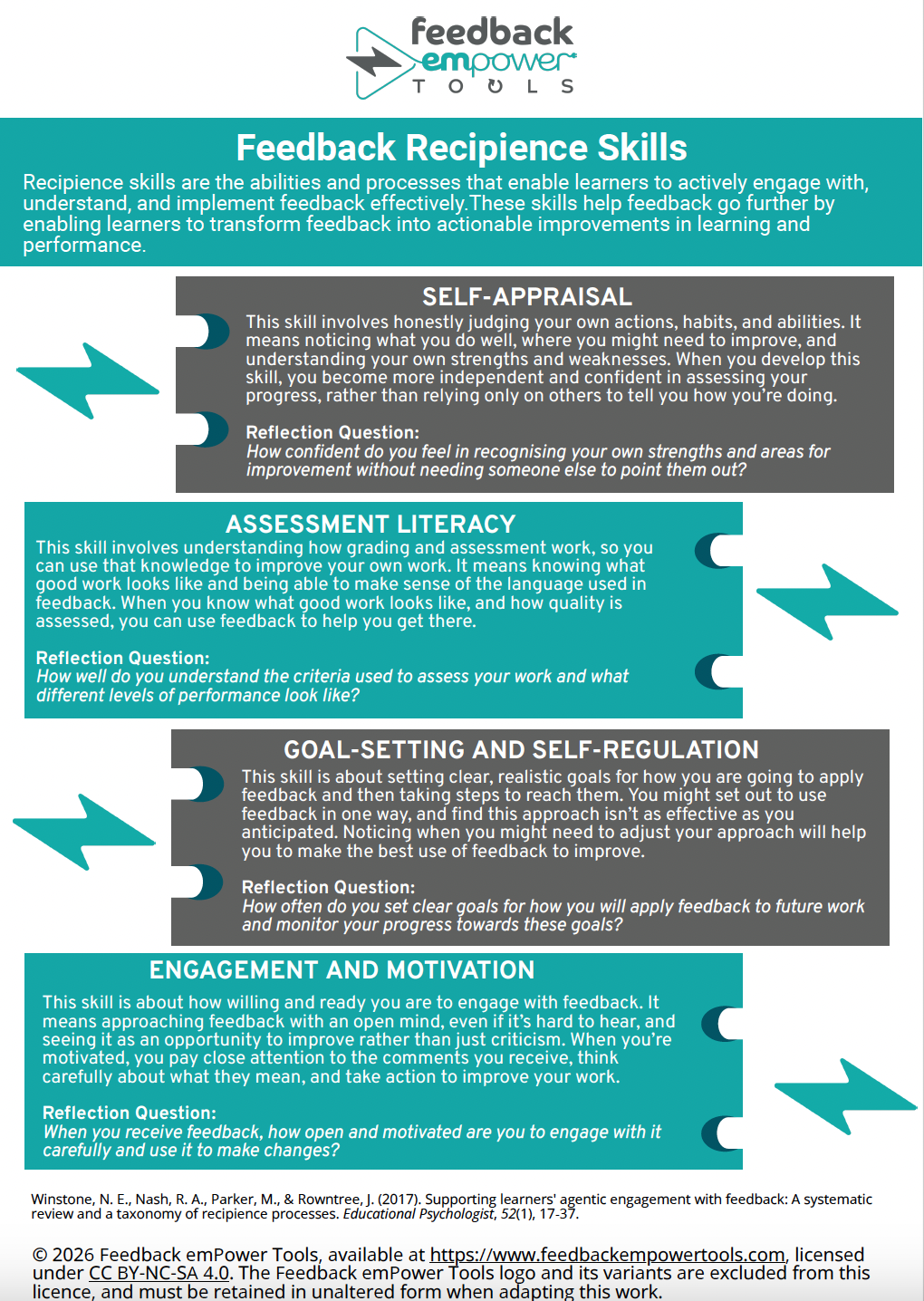
- Winstone, N. E., Nash, R. A., Parker, M., & Rowntree, J. (2017). Supporting learners’ agentic engagement with feedback: A systematic review and a taxonomy of recipience processes. Educational Psychologist, 52, 17-37.
- Nash, R. A., & Winstone, N. E. (2017). Responsibility-sharing in the giving and receiving of assessment feedback. Frontiers in Psychology, 8, 1519.
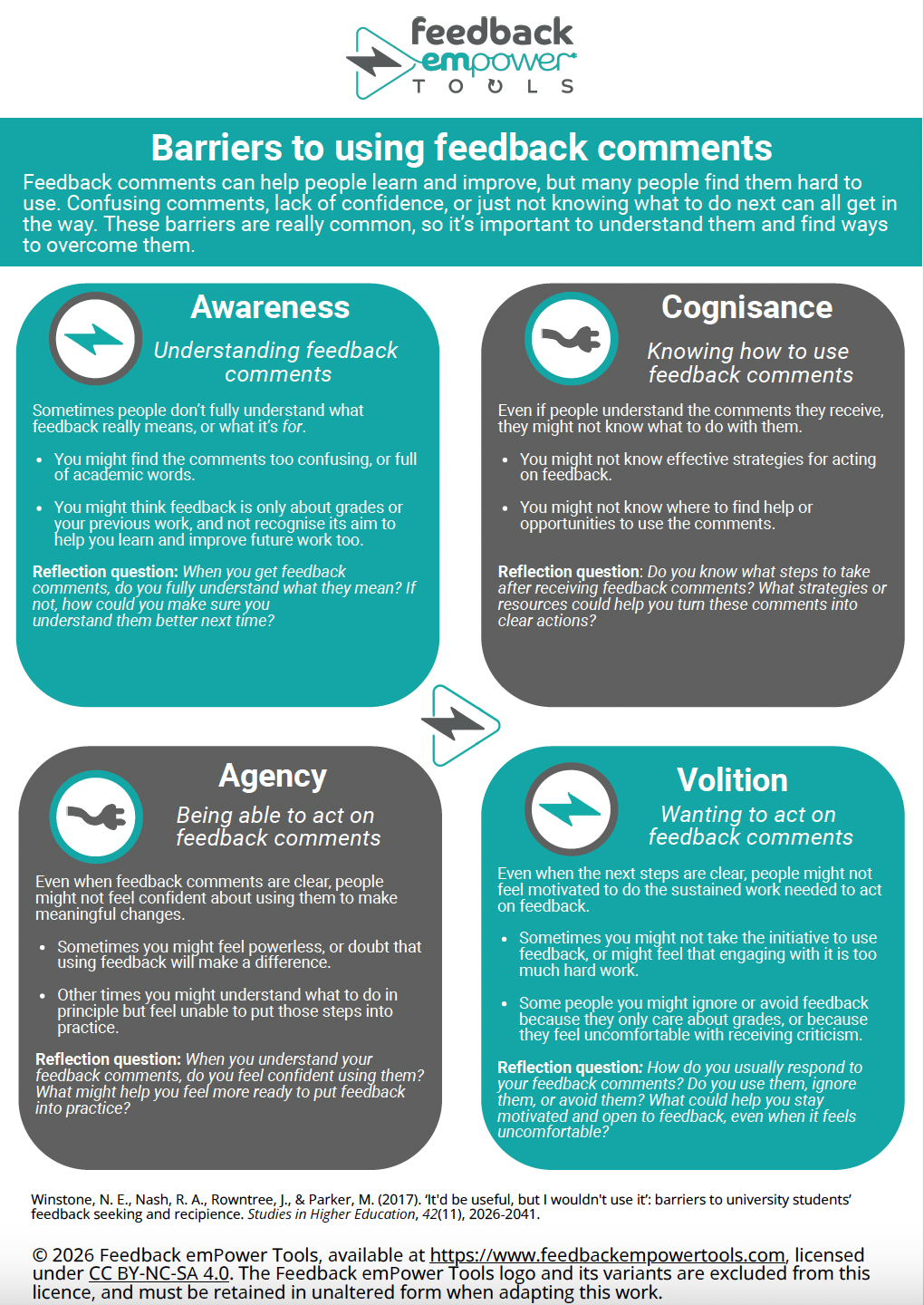
- Winstone, N. E., Nash, R. A., Rowntree, J., & Parker, M. (2017). ‘It’d be useful, but I wouldn’t use it’: Barriers to university students’ feedback seeking and recipience. Studies in Higher Education, 42, 2026-2041.
- Winstone, N. E., Balloo, K., & Carless, D. (2022). Discipline-specific feedback literacies: A framework for curriculum design. Higher Education, 83(1), 57-77.
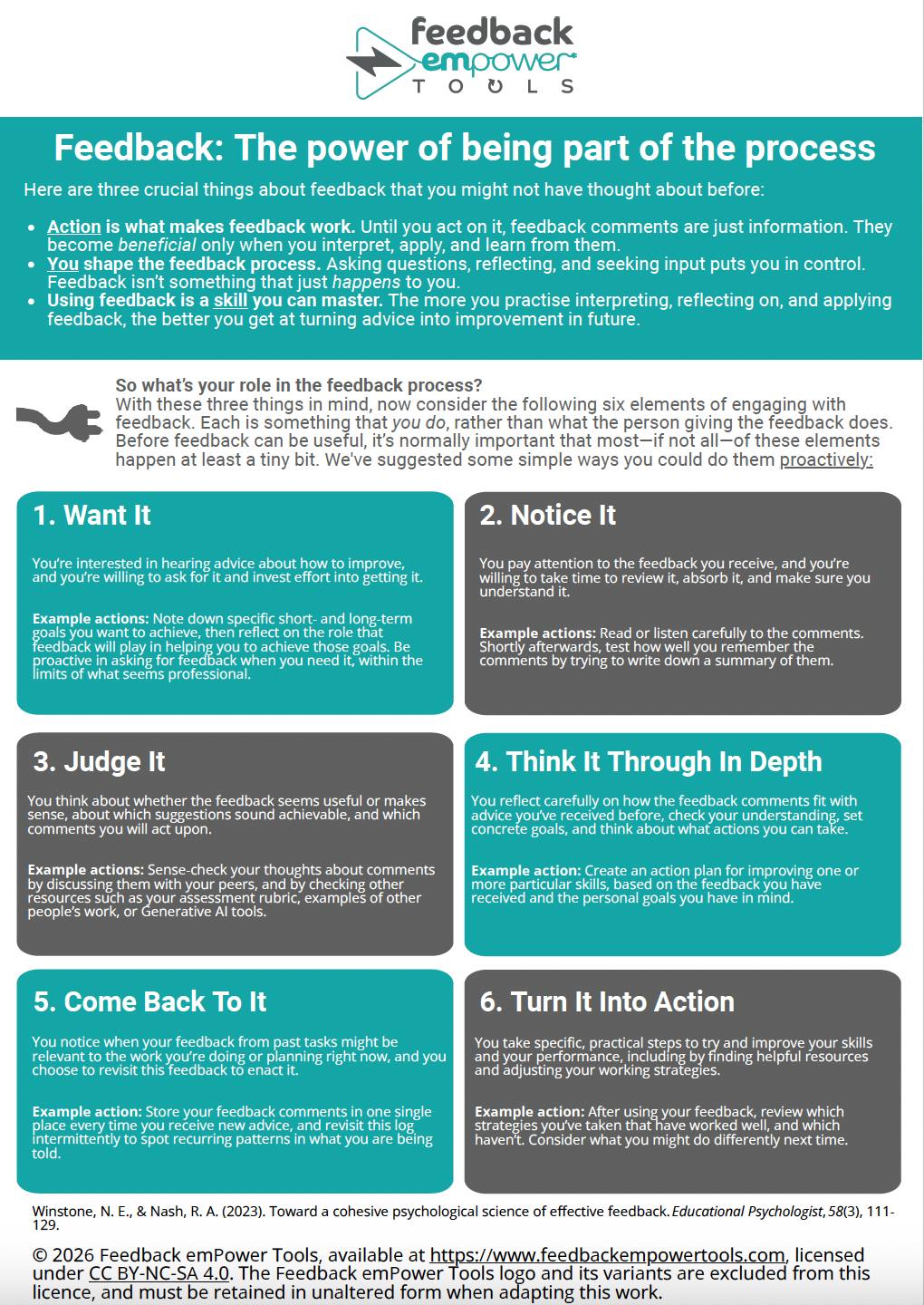
- Winstone, N. E., & Nash, R. A. (2023). Toward a cohesive psychological science of effective feedback. Educational Psychologist, 58, 111-129.
- Nash, R. A., & Balloo, K., (2025, Jan 17). As students become more ‘distant’, can feedback still hit the mark? Times Higher Education.


