
On this page you’ll find a list of our PowerPacks, each of which explores a common challenge of using feedback.
Start by choosing one PowerPack that sounds most useful to you!
Or, to help you figure out where to start, you might like to try our PowerPack Selector Bot.
Start by choosing one PowerPack that sounds most useful to you!
Or, to help you figure out where to start, you might like to try our PowerPack Selector Bot – just click on the robot!
PowerPack Selector Bot

All prompts submitted to this chatbot may be collated for research and analytics purposes. Please do not enter any private or personally identifying details. See our Privacy Policy for further details. Note that this PowerPack Selector Bot uses AI, and its answers may therefore be biased or inaccurate.
All prompts submitted to this chatbot may be collated for research and analytics purposes. Please do not enter any private or personally identifying details. See our Privacy Policy for further details. Note that this PowerPack Selector Bot uses AI, and its answers may therefore be biased or inaccurate.
PowerPacks

Prepare to make the most of a future opportunity to discuss your feedback with the person who gave it

Recognise and appraise the initial ‘knee-jerk’ reactions you might have when receiving feedback

Be able to use assessment documentation (such as assessment briefs, rubrics and grade descriptors) as tools for making sense of your feedback

Identify relevant qualities of feedback you have received, and reflect on how these qualities affect its apparent usefulness

Identify value in feedback that seems to offer you inconsistent or incompatible advice

Use your feedback as a tool for identifying targets for future development, and identifying some appropriate next steps

Initiate constructive conversations with peers or family members that help you to make sense of your feedback

Feel confident in your understanding of words and terms that are commonly used in feedback

Be able to use Generative AI tools to make sense of your feedback, and to support you with reflecting on your next steps
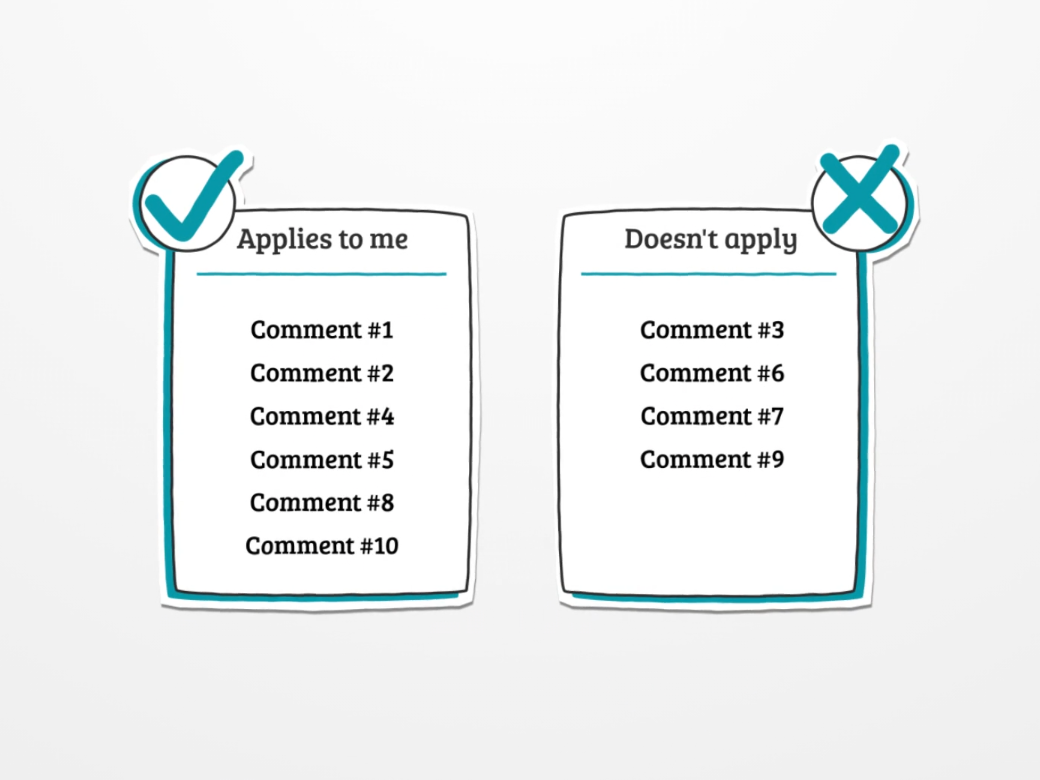
Find value in feedback that was intended to apply to a whole group of people, or feedback that otherwise isn’t specifically about your own work

Be willing to look for and find value in feedback that is potentially incorrect, or that feels misguided

Find and keep your motivation when engaging with and using your feedback

Examine your emotional reactions to feedback, and distinguish between reactions that are helpful vs. unhelpful in the immediate and longer term

Recognise and reflect on the broader messages being conveyed by specific feedback comments that you receive

Recognise your potential to improve skills by using feedback, even when your prior efforts don’t seem to have paid off

Appreciate the value of revisiting feedback, and develop an informed impression of themes and trends in your feedback over time

Recognise how feeling overwhelmed by feedback affects your engagement with it

Be able to use similar examples of other people’s work as tools for making sense of your feedback


